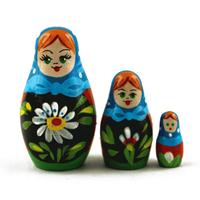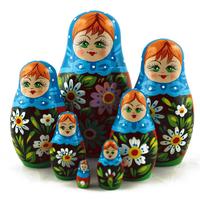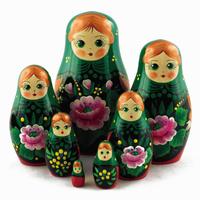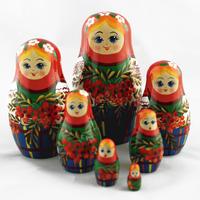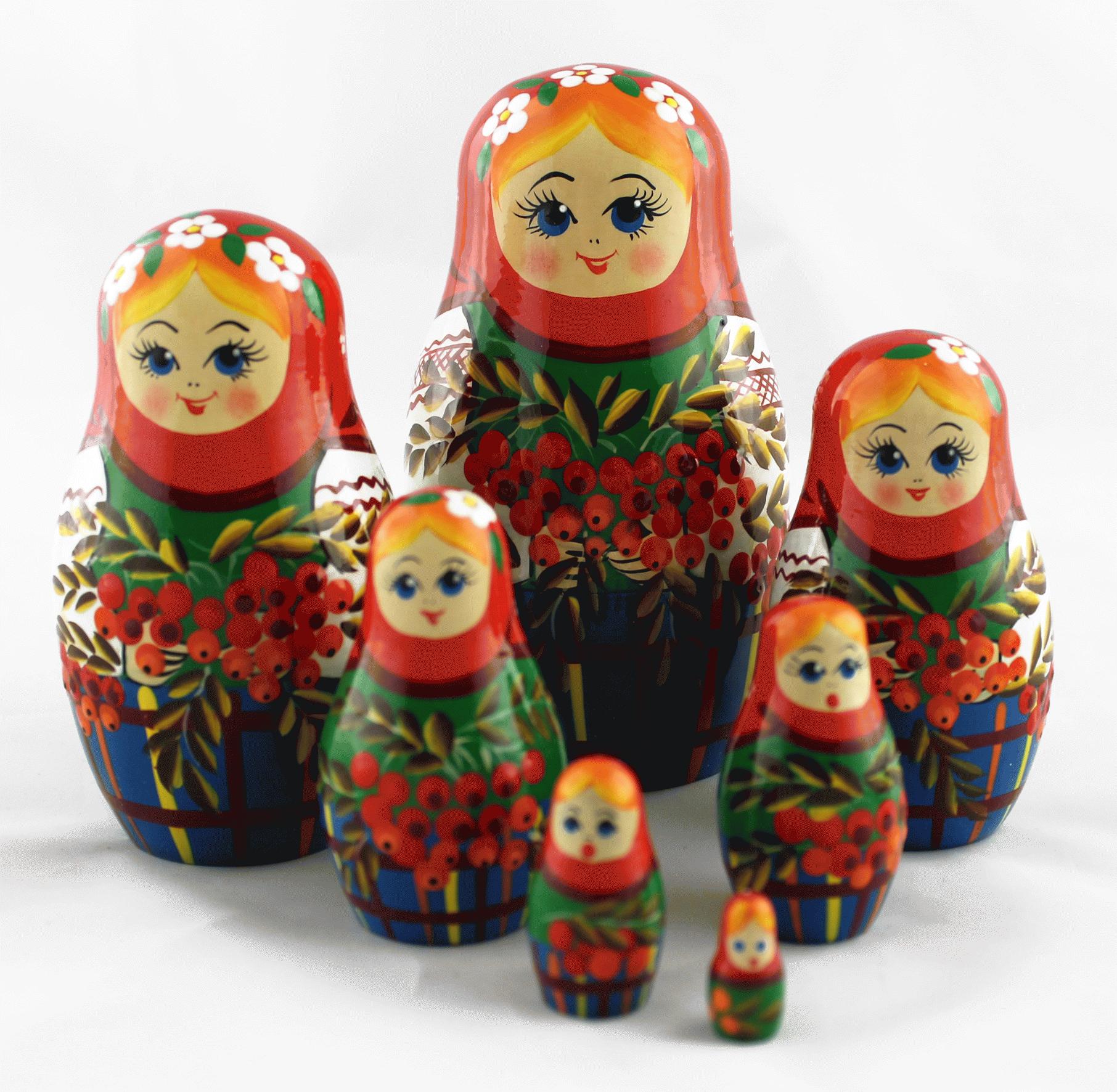
- Seasoned linden wood, nothing else
- Turned on a lathe and painted by hand in Russian workshops
- A seam that grips, under several coats of clear lacquer
The Birth of a Cultural Icon: Moscow 1890
The story of the Russian nesting doll (known natively as Matryoshka / Матрёшка) began in the late 19th century in the vibrant artistic enclave of the Abramtsevo Estate Colony ↗, just north of Moscow. Under the patronage of industrialist and arts visionary Savva Mamontov, Russian painters and woodturners sought to revitalize native folk craft.
In 1890, at the Children's Education Workshop (Detskoye Vospitanie), master woodturner Vasily Zvyozdochkin carved the very first hollowed set of eight wooden figures from soft, seasoned linden wood. The prominent folk artist Sergey Malyutin hand-painted the outer figure as a rosy-cheeked peasant girl wearing a traditional embroidered apron, a yellow headscarf (platok), and holding a black rooster.
When the doll was opened, each subsequent figure revealed alternating boys and girls engaged in traditional rural chores, a sickle, a bowl of porridge, a wooden basket, culminating in the tiniest innermost figure: a swaddled infant asleep in a wooden cradle. Today, collectors can explore our authentic 5-piece nesting dolls and mastercraft 10-piece sets that continue this unbroken lineage.
Did You Know?
In 1900, Mamontov presented the original Matryoshka doll at the Exposition Universelle in Paris ↗, where it was awarded a bronze medal. The international sensation that followed established the nesting doll as an enduring global symbol of Russian folk art.
The Etymology and Meaning of "Matryoshka"
The name Matryoshka is a loving diminutive of the traditional Russian female name Matryona (Матрёна), which traces its etymological roots back to the Latin mater, meaning mother. In 19th-century imperial Russia, Matryona was one of the most common names among rural peasant women, evoking images of maternal warmth, nurturing hospitality, and a bountiful household. (Learn how this compares to Western nomenclature in our guide: Matryoshka vs. Babushka Dolls Explained).
Metaphorically, the nesting structure represents:
- Motherhood and Family Continuity: The mother encloses and protects her children and grandchildren, symbolizing the unbroken chain of generations.
- Fertility and Abundance: The multitude of figures hidden within a single exterior form represents biological and agricultural fertility.
- The Layers of the Soul: In philosophical interpretations, peeling away each outer doll represents uncovering deeper layers of human consciousness and inner truth.
The Art of Traditional Handcrafting
Every authentic nesting doll begins with the selection of 100% solid seasoned linden wood (Tilia cordata ↗). Linden is uniquely suited for precision woodturning because it is light, uniform in density, knot-free, and resistant to warping during climate shifts.
A master turner (tokar) follows an age-old rule: always turn the smallest innermost doll first. Because the smallest figure cannot be hollowed out, its dimensions establish the baseline scale for all enclosing layers. Read the complete step-by-step woodworking process in From Linden Tree to Masterpiece.
How to Build a Meaningful Collection
When starting or expanding your nesting doll collection, look for authenticity markers: natural wood grain visible in the base, hand-painted brushwork with individual character, a secure friction-fit seam, and the distinctive pleasant aroma of natural linden wood. Review our collector handbook: How to Spot Authentic Handcrafted Nesting Dolls, and rest assured with our free insured worldwide delivery and 30-day return policy.
Frequently Asked Questions
Who made the first Russian nesting doll? +
The first Russian nesting doll was carved in 1890 by master woodturner Vasily Zvyozdochkin and hand-painted by artist Sergey Malyutin at the Children's Education Workshop in Moscow.
Why is it called Matryoshka? +
Matryoshka is a diminutive of the popular Russian peasant name Matryona, derived from the Latin word 'mater' meaning mother, symbolizing family, motherhood, and nurturing.